BUSINESS HOURS

Inquiries and orders can be sent via email or WhatsApp.

Phone: Mon - Fri 10:00 - 18:00

CONTACT

Consulting & Sales
Regine Grosch
Gütersbachweg 10
75323 Bad Wildbad

Questions or order?
+49 (0)178 72 48 163
reginegrosch@gmail.com

About this website

You are looking for cosmetics for skin and facial care or Nutritional supplement and do you have any questions about it? Solutions to most requirements are compiled on the "Guidance" pages. From there you can get to the recommended products, which can either be found in the Deesse Online Shop or can be ordered directly from me.

Question / Order? +49 (0)178 72 48 163

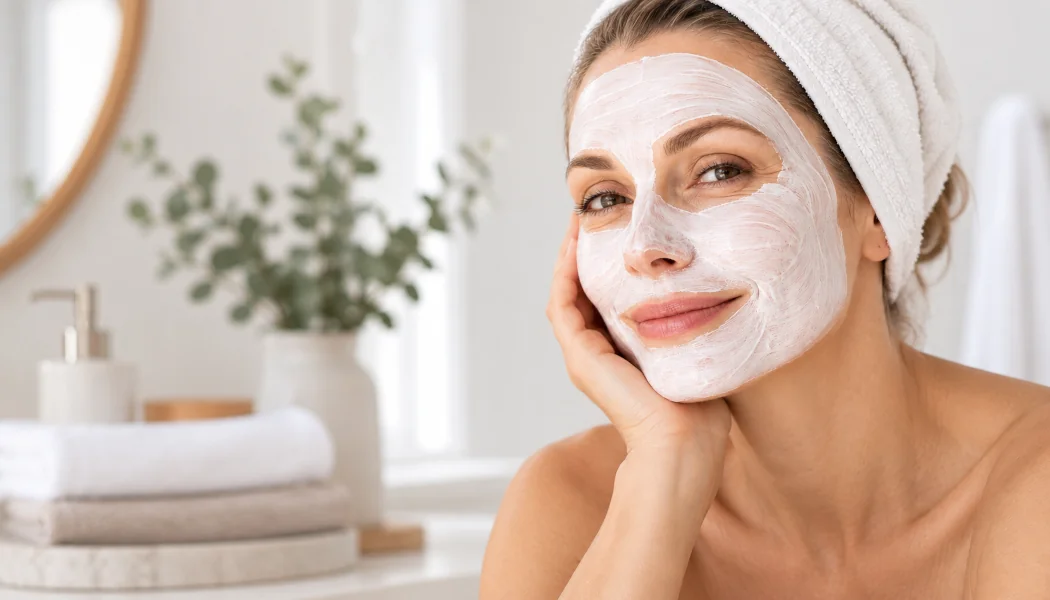
Woman enjoying a nourishing facial mask

DÉESSE GUIDE · FACIAL CARE

How to Use Face Masks & Exfoliators Correctly

A face mask gives your skin targeted extra care, while an exfoliator removes dead skin cells. The important thing is to choose what suits your skin type and its current needs.

Discover the differences, how often to use masks and exfoliators, and what to keep in mind when applying them.

Understand first, then choose

Mask or exfoliator – what does your skin need?

Masks and exfoliators serve different purposes. Exfoliating is a preparatory step: it removes dead skin cells and can leave the skin's surface looking smoother and more even.

A face mask can be used afterwards or on its own. It adds targeted care to your everyday routine – for instance, extra moisture, richer nourishment or care tailored to how your skin currently feels.

01

Exfoliator

When the skin's surface needs a fresh boost

An exfoliator removes loose dead skin cells from the surface. This can make skin feel smoother and help you apply subsequent skincare to a well-prepared surface.

Worth considering when …

your skin feels rough, uneven or a little dull and you would occasionally like to add an extra cleansing step to your routine.

02

Face mask

When your skin needs targeted extra care

A mask does not replace everyday facial skincare. It complements your routine when a particular skin need becomes more noticeable.

Worth considering when …

your skin temporarily feels drier, stressed, more blemish-prone or in need of extra attention, and you want to respond to that specific need.

The main point

Choose what suits your skin rather than using more products. An exfoliator does not have to be followed by a mask every time – and not every skin type needs both equally often.

Everyday application

How often should you use masks and exfoliators?

More frequent use does not necessarily mean better results. What matters is how your skin responds and which type of product you use.

A flexible guideline is more useful than a rigid schedule. This is particularly important for sensitive or already stressed skin, where a cautious approach is advisable.

01

Exfoliator

Use it occasionally rather than too often

You generally do not need to exfoliate every day. For many skin types, occasional use is enough to remove loose dead skin cells and smooth the surface.

As a guide around once a week

Depending on your skin type, the product and your tolerance, longer intervals may be preferable.

Look out for

If your skin feels very tight, burns or looks noticeably irritated after exfoliation, reconsider the method and frequency.

02

Face mask

Add extra care according to how skin feels

Face masks offer more flexibility. The right frequency depends on the type of care you want and what your skin currently needs.

As a guide around once or twice a week

Moisturising or nourishing masks can also be used selectively when your skin feels particularly dry or stressed.

Look out for

Using more products or leaving a mask on for longer does not automatically improve your skincare.

Exfoliator + mask

Can you use them together?

Yes – provided your skin tolerates the combination well. A mild exfoliator before a mask may be useful because it removes loose dead skin cells before targeted care is applied.

However, if your skin is sensitive, irritated or already under strain, do not assume the two steps should always be combined.

The most important rule

Let your skin set the pace. Recommended intervals are guides, not requirements. If your skin already feels comfortable and balanced, it does not automatically need another product.

Choosing for your skin type

Which exfoliator suits which skin type?

Not every exfoliator is equally suitable for every skin type. Consider your underlying skin type, its current condition and how intensively the surface is treated.

The drier or more sensitive your skin, the gentler and less frequent exfoliation should be. Skin that is more resilient may tolerate a little more – but it is still wise to start gently and pay attention to how your skin feels.

Normal skin

Balanced and uncomplicated

Normal skin generally tolerates occasional exfoliation well, as long as the treatment is not unnecessarily intensive.

Suitable options

Mild or enzyme-based exfoliators when you want skin to look smoother and fresher.

Look out for

Even normal skin does not need daily exfoliation.

Dry skin

Gentle rather than intensive

Dry skin often feels tight and may have a more delicate surface. Choose an exfoliator carefully and use it sparingly.

Suitable options

Gentle or enzyme-based exfoliators that do not require vigorous rubbing.

Look out for

Your skin should not feel dry or uncomfortably tight afterwards.

Combination skin

Consider different facial areas

With combination skin, the T-zone and cheeks often react differently. Exfoliation need not be equally intensive across the whole face.

Suitable options

Mild exfoliators that can be used selectively on areas where the surface looks more uneven or congested.

Look out for

Drier cheeks often need less exfoliation than the T-zone.

Blemish-prone skin

Refine the appearance without irritation

For blemish-prone skin, exfoliation may help when the surface feels uneven or rough. Strong mechanical friction, however, is not helpful.

Suitable options

Gentle or enzyme-based exfoliators that avoid vigorous rubbing.

Look out for

Do not place additional mechanical stress on inflamed-looking or highly irritated areas.

Sensitive skin

Choose particularly carefully

Sensitive skin is more likely to respond with redness, burning or tightness. Exfoliation should not be treated as an automatic part of the routine.

Suitable options

If you exfoliate at all, choose very mild methods with as little rubbing as possible.

Look out for

Avoid exfoliating skin that is already irritated, red or unusually sensitive.

Mature skin

Smoother skin without unnecessary stress

Mature skin may benefit from gently removing loose dead skin cells, but should not be excessively stripped or irritated.

Suitable options

Mild or enzyme-based exfoliators followed, where appropriate, by moisturising or intensive care.

Look out for

The drier or more demanding skin feels, the gentler the exfoliation should be.

Easy to remember

The more sensitive your skin, the gentler your exfoliator should be.

Normal and combination skin: often offer a little more flexibility in product choice.

Dry, sensitive and mature skin: choose mild products and use them sparingly.

Blemish-prone skin: do not rub harder simply because the surface looks uneven.

Choose according to your skin's needs

Which face mask suits which skin concern?

A face mask does not need to be a permanent part of your routine. Use one when your skin temporarily needs more moisture, soothing care, intensive nourishment or a targeted addition for blemishes.

The key question is less about the name of the mask and more about how your skin feels now – and what it currently lacks.

Moisture

When skin feels dry or dehydrated

A moisturising mask is especially useful when your skin temporarily feels dry, less supple or uncomfortably tight.

Worth considering when …

central heating, sunshine, wind or a demanding period leaves your skin needing more moisture and comfort.

Often suits

dry, normal and mature skin – and combination skin where certain areas feel dehydrated.

Soothing care

When skin feels stressed

A soothing mask may be worth considering when your skin feels especially in need of care after environmental exposure or a demanding period.

Worth considering when …

your skin develops tightness, redness or discomfort more readily, and you want to keep your routine calm and simple.

Often suits

sensitive, dry or mature skin, or skin that temporarily needs a gentler approach.

Blemishes

When certain areas look more unsettled

For blemish-prone or combination skin, a carefully chosen mask can be helpful when certain areas tend towards blemishes or an uneven appearance.

Worth considering when …

the T-zone or individual areas need extra attention without treating the whole face in exactly the same way.

Often suits

blemish-prone and combination skin, especially when applied selectively.

Intensive nourishment

When skin needs extra comfort

A richer mask may help when dry or more demanding skin temporarily feels insufficiently nourished by everyday moisturiser alone.

Worth considering when …

your skin feels drier, less supple or generally more demanding, and you want to give it an occasional extra skincare moment.

Often suits

dry and mature skin, and skin that needs more comfort at certain times of year.

Freshness and a little time for yourself

When your skin looks less fresh

A mask does not always have to address a specific concern. Sometimes it is simply about treating your skin to an additional moment of care.

Worth considering when …

your skin looks tired or less fresh and you want to add an occasional pampering step to your usual routine.

Often suits

normal skin and other skin types without a particularly pronounced current concern.

Sensitive skin

Choose fewer products, but choose carefully

With sensitive skin, a mask should not automatically become an extra step. Individual tolerance is what matters.

Worth considering when …

you already know that your skin tolerates the chosen product and you consciously want to add just one extra step.

Important

Avoid experimenting with extra products when skin is clearly irritated, burning or very red.

A simple way to decide

Consider how your skin feels before choosing a mask.

Dry or tight? Focus on moisture and comfort.

Stressed or sensitive? Keep extra care gentle and minimal.

Blemished or uneven in certain areas? Treat those areas selectively rather than the whole face in the same way.

Already balanced? A mask is optional, not essential.

Step by step

Exfoliator and mask how to use them correctly

The right order is simple: cleanse your skin first. If you plan to exfoliate, do so before applying a mask. Finish with skincare suited to your skin type.

The aim is not to combine as many steps as possible. A calm, well-chosen routine is usually more useful than an elaborate programme.

01

Preparation

Cleanse your face thoroughly

Remove make-up, sun protection and daily residue. Masks and exfoliators should be applied to clean skin.

Look out for

Choose a cleanser that suits your skin type and does not dry it out unnecessarily.

02

Exfoliating

Apply gently

Follow the instructions for your chosen exfoliator. With mechanical scrubs, avoid vigorous rubbing – gentle movements are enough.

Look out for

Avoid the eye area and do not place extra stress on sensitive or already irritated skin.

03

After exfoliating

Remove the exfoliator completely

Remove it as directed for your particular product. Your skin should be clean before you move on to the next step.

Good to know

You do not need to apply a mask after every exfoliation. You can use the two products on separate occasions.

04

Face mask

Apply where your skin needs it

Spread the mask evenly over the intended facial areas. With combination or blemish-prone skin, it may make sense to treat different areas separately.

Look out for

Follow the product guidance on quantity and application time. Leaving it on longer is not necessarily better.

05

Finishing touches

Continue with your usual skincare

After your mask, follow your usual facial routine as appropriate for the product and its instructions. Choose what feels comfortable and suits your skin.

Important during the day

After exfoliating, take particular care to use appropriate sun protection.

The order at a glance

Cleanse → Exfoliate → Mask → Moisturise

Exfoliating and masking are not a compulsory combination. Simply skip any step your skin does not need that day.

Avoid common mistakes

Common mistakes with masks and exfoliators

Masks and exfoliators are additional treatments, and that is also where mistakes often happen. Used too often, too intensely or in an unsuitable combination, an enjoyable skincare moment can become an unnecessary strain on the skin.

A few simple principles help keep your routine gentle and appropriate.

01

Too often

More is not necessarily better

Exfoliating in particular should not be repeated too frequently. Excessive use can put strain on the skin and make it feel less comfortable.

A better approach

Start with longer intervals and see how your skin responds.

02

Too much pressure

Hard rubbing offers no advantage

With mechanical exfoliators, it may seem that more pressure gives better results. For your skin, however, it mainly means more physical friction.

A better approach

Use gentle movements and light pressure, especially on the cheeks, around the eyes and in more sensitive areas.

03

Too long

Do not extend the application time unnecessarily

Leaving a mask on longer does not automatically make it more effective or nourishing.

A better approach

Follow the stated application time and remove the mask as directed.

04

The wrong time for your skin

Do not add stress to already irritated skin

If your skin is already burning, noticeably red or uncomfortable, exfoliating is usually not the right next step.

A better approach

Simplify your routine and only return to additional treatments once your skin has settled.

05

The wrong product

Not every mask suits every skin type

A rich mask may feel lovely on dry skin, while blemish-prone areas may need something quite different.

A better approach

Choose according to your skin's current needs and, where useful, treat different areas separately.

06

Too much at once

Do not overload your routine

Using an exfoliator, a mask, several serums and rich skincare one after another is not automatically the better choice.

A better approach

Select a few appropriate steps and give your skin time to respond.

The best measure

Your skin should feel more comfortable after skincare.

If skin regularly feels very tight, burns or looks noticeably irritated after a mask or exfoliator, the product, frequency or method may not be right.

Extra care should support your skin, not stress it.

Suitable Déesse skincare

Choose Déesse masks and exfoliators to suit your needs

Déesse offers different masks and exfoliators for a range of skin types and needs. The goal is not to use as many as possible, but to choose the product that suits your skin and how it currently feels.

The following suggestions match the needs discussed above with options from the Déesse range.

01

Moisture

Déesse Moisturising Mask

For skin that feels drier or dehydrated and would benefit from an occasional extra moment of care.

Ideal when …

tightness, dry patches or reduced suppleness are your main concerns.

Your benefit:

An uncomplicated extra treatment that can be added according to your skin's current needs.

02

Stressed skin

Déesse Anti-Stress Mask

For skin that feels stressed and could benefit from a calmer, complementary treatment.

Ideal when …

your skin temporarily reacts more sensitively or wants extra care after environmental exposure.

Your benefit:

Targeted extra care for moments when your skin could use more calm and attention.

03

Blemishes and combination skin

Déesse Zinc Cream Mask

For skin prone to blemishes or an uneven appearance that needs targeted additional care.

Ideal when …

certain facial areas, particularly the T-zone, temporarily need more attention.

Your benefit:

It can be applied selectively without treating the whole face in the same way.

04

Gentle exfoliation

Déesse Enzyme Exfoliating Mask

For skin that would benefit from gently removing loose dead skin cells without vigorous mechanical rubbing.

Ideal when …

you want to add an occasional low-friction exfoliating step to your routine.

Your benefit:

An exfoliating treatment with mask-like care in one additional skincare step.

Déesse product selection

Would you like to explore suitable masks and exfoliators?

The product overview contains Déesse masks and exfoliators, with more details about individual products.

Frequently asked questions

Questions about masks & exfoliators

How often, in which order and for which skin type? Here are concise answers to the most common questions.

How often should I exfoliate my face?

For many skin types, around once a week is a useful guideline. Dry or sensitive skin may benefit from longer intervals. The product you use and your skin's reaction are what ultimately matter.

How often can I use a face mask?

Depending on the mask and your skin's needs, once or twice a week may be appropriate. Moisturising or nourishing masks can also be used when skin temporarily feels drier or more stressed.

Should I exfoliate before or after applying a mask?

If you combine the two, exfoliate first. After cleansing, remove loose dead skin cells, then apply a mask suited to your skin's needs. However, you do not have to combine them every time.

Do I always need a mask after exfoliating?

No. Exfoliating and masking are separate skincare steps. If your skin does not need an additional mask afterwards, simply continue with your usual facial skincare.

Which exfoliator is suitable for sensitive skin?

Choose a particularly mild exfoliator that involves as little rubbing as possible. Enzyme-based products may be an alternative to mechanical scrubs. Avoid exfoliating skin that is already irritated, burning or noticeably red.

Can I use different masks on combination skin?

Yes. Applying different masks to different zones may be particularly useful with combination skin. The T-zone may need different care from drier cheeks, so you need not apply the same mask to the entire face.

Can I leave a face mask on for longer?

Follow the instructions for your specific product. A longer application time does not automatically give better or more intensive care.

What should I do after exfoliating?

Choose subsequent skincare that suits your skin's condition. Appropriate sun protection is particularly important during the day.

Skincare starts with your skin type

Still unsure what your skin really needs?

A mask or exfoliator is only one part of your routine. Your skin type remains the foundation, helping you choose suitable cleansing, everyday care and additional treatments.

Our skin type guide explains the typical characteristics of normal, dry, sensitive, blemish-prone, mature and combination skin, along with tips for your everyday routine.

Why Déesse

Since 1971, Déesse Cosmetics has continuously developed new products with a focus on quality. The customer-friendly sales concept supports the company philosophy. The unique, nature-based products correspond to the latest scientific standards and offer safety and well-being in harmony with nature and the environment.

Socials

You can also reach me on Facebook and Instagram.

Remark

Product images are not to scale

Contact

Regine Grosch
Consulting & Sales
Déesse Kosmetik
Gütersbachweg 10
D-75323 Bad Wildbad

Telefon & WhatsApp

+49 (0)178 72 48 163

*Déesse Online-Shop

The references marked with "*" (links to the Déesse online shop) are compensation links. If you click on such a link and then order something through the shop, I will receive compensation from DÉESSE. The end customer sales price according to the valid price list is not affected.
Orders can continue to be sent directly to my Email address or sent via WhatsApp.

Copyright 2026by Regine Grosch. All Rights Reserved.
Settings saved
Datenschutzeinstellungen

We use cookies on our website. Some of them are essential, while others help us to improve this website and your experience. You can find more information about this and your rights as a user in our data protection declaration at the bottom of the page.

Technically required cookies are always loaded.


Domainname: ds-kosmetik-wellness.de
Ablauf: 30 Tage
Speicherort: Localstorage
Beschreibung: Speichert die Privacy Level Einstellungen aus dem Cookie Consent Tool "Privacy Manager".

user_privacy_settings_expires

Domainname: ds-kosmetik-wellness.de
Ablauf: 30 Tage
Speicherort: Localstorage
Beschreibung: Speichert die Speicherdauer der Privacy Level Einstellungen aus dem Cookie Consent Tool "Privacy Manager".

ce_popup_isClosed

Domainname: ds-kosmetik-wellness.de
Ablauf: 30 Tage
Speicherort: Localstorage
Beschreibung: Speichert, dass das Popup (Inhaltselement - Popup) durch einen Klick des Benutzers geschlossen wurde.

onepage_animate

Domainname: ds-kosmetik-wellness.de
Ablauf: 30 Tage
Speicherort: Localstorage
Beschreibung: Speichert, dass der Scrollscript für die Onepage Navigation gestartet wurde.

onepage_position

Domainname: ds-kosmetik-wellness.de
Ablauf: 30 Tage
Speicherort: Localstorage
Beschreibung: Speichert die Offset-Position für die Onepage Navigation.

onepage_active

Domainname: ds-kosmetik-wellness.de
Ablauf: 30 Tage
Speicherort: Localstorage
Beschreibung: Speichert, dass die aktuelle Seite eine "Onepage" Seite ist.

view_isGrid

Domainname: ds-kosmetik-wellness.de
Ablauf: 30 Tage
Speicherort: Localstorage
Beschreibung: Speichert die gewählte Listen/Grid Ansicht in der Demo CarDealer / CustomCatalog List.

portfolio_MODULE_ID

Domainname: ds-kosmetik-wellness.de
Ablauf: 30 Tage
Speicherort: Localstorage
Beschreibung: Speichert den gewählten Filter des Portfoliofilters.

Eclipse.outdated-browser: "confirmed"

Domainname: ds-kosmetik-wellness.de
Ablauf: 30 Tage
Speicherort: Localstorage
Beschreibung: Speichert den Zustand der Hinweisleiste "Outdated Browser".
START YOUR OWN BUSINESS
BECOME A DÉESSE PARTNER
YOUR DÉESSE CONSULTANT

REGINE GROSCH

You are using an outdated browser. The website may not be displayed correctly.